Buy dutchoven.eu ?
We are moving the project
dutchoven.eu .
Are you interested in purchasing the domain
dutchoven.eu ?
domain@kv-gmbh.de · 0541-91531010
Buy dutchoven.eu ?
How do you distinguish determinative compounds and possessive compounds?
Determinative compounds are formed by combining two words to create a new concept, where the first word determines the meaning of the second word. For example, "blackboard" is a determinative compound where "black" determines the type of "board." Possessive compounds, on the other hand, indicate possession or relationship between the two words. For example, "John's car" is a possessive compound where "John" possesses the "car." In summary, determinative compounds determine the meaning of the second word, while possessive compounds indicate possession or relationship between the two words. **
How can one distinguish ionic compounds from molecular compounds?
Ionic compounds are formed from the attraction between positively and negatively charged ions, while molecular compounds are formed from the sharing of electrons between atoms. One way to distinguish between the two is to look at their chemical formulas. Ionic compounds typically consist of a metal and a nonmetal, while molecular compounds consist of nonmetals only. Additionally, ionic compounds tend to have higher melting and boiling points compared to molecular compounds due to their strong electrostatic attractions. Finally, conducting a simple solubility test can also help distinguish between the two types of compounds, as ionic compounds are often soluble in water while molecular compounds may not be. **

Similar search terms for Compounds
Top-Angebote
Products related to Compounds:
-
HQ BOSH! Simple Recipes. Unbelievable Results. All Plants – Bestselling Vegan Cookbook Easy Plant-Based Recipes for Everyday CookingWant to cook ridiculously good plant-based food from scratch but have no idea where to start? With over 140 incredibly easy and outrageously tasty all plants meals; BOSH! The Cookbook will be your guide. Henry Firth and Ian Theasby; creators of the worlds biggest and fastest-growing plant-based platform; BOSH!; are the new faces of the food revolution. Their online channels have over 2.3 million fans and constantly inspire people to cook ultra-tasty amp; super simple recipes at home. Always ensuring they stick to fresh; supermarket-friendly ingredients; BOSH! truly is 'plant-based food for everyone'. In BOSH! The Cookbook; Ian and Henry share over 140 of their favourite go-to breakfasts; crowd-pleasing party pieces; hearty dinners; sumptuous desserts amp; incredible sharing cocktails. The book is jam-packed with fun; unpretentious and mega satisfying recipes; including Creamy Mac and Greens; Burrito Samosas; the Big Bhaji Burger; the Worlds Best Pesto Lasagne; Satay Sweet Potato BOSH! Bowl; Spanish Beach Churros; Gooey PBJ Brownies and Salted Caramel Chocolate Crunch Tart; all easy enough to be rustled up any night of the week. It's enough to convince the staunchest of carnivores to give plants a whirl. Whether you're already sold on the plant-based lifestyle or you simply want to incorporate more meat; dairy and egg-free meals into your week; BOSH! The Cookbook is your plant-based bible. BOSH!8,40 £*Shipping: 2,99 £Secure redirect to the provider

-
Can you help me with chemistry? I need information about atomic compounds, metal compounds, and ionic compounds.
Of course! Atomic compounds are formed when two or more non-metal atoms are chemically bonded together, such as in molecules like water (H2O) and carbon dioxide (CO2). Metal compounds are formed when a metal atom is bonded to one or more non-metal atoms, such as in compounds like sodium chloride (NaCl) and iron oxide (Fe2O3). Ionic compounds are formed when a metal atom transfers one or more electrons to a non-metal atom, resulting in the formation of positively and negatively charged ions that are attracted to each other, such as in compounds like sodium chloride (NaCl) and calcium carbonate (CaCO3). Let me know if you need more specific information or examples! **
-
Why do molecular compounds have lower boiling points than ionic compounds?
Molecular compounds have lower boiling points than ionic compounds because the intermolecular forces holding the molecules together are generally weaker than the electrostatic forces holding ions together in ionic compounds. In molecular compounds, the intermolecular forces are typically van der Waals forces, dipole-dipole interactions, or hydrogen bonding, which are weaker than the strong ionic bonds in ionic compounds. As a result, less energy is required to overcome these weaker intermolecular forces, leading to lower boiling points for molecular compounds compared to ionic compounds. **
-
What are atomic compounds?
Atomic compounds are chemical compounds that are composed of individual atoms of different elements bonded together. These compounds are held together by chemical bonds, such as ionic or covalent bonds, and do not contain any molecules. Examples of atomic compounds include sodium chloride (NaCl) and water (H2O). Unlike molecular compounds, which are made up of molecules, atomic compounds are made up of individual atoms. **
-
Name the isomeric compounds.
Isomers are compounds that have the same molecular formula but different structural arrangements. Some examples of isomeric compounds include butane and isobutane, which both have the molecular formula C4H10 but differ in their structural arrangement. Another example is glucose and fructose, which both have the molecular formula C6H12O6 but have different structural arrangements and properties. **
What are sodium compounds?
Sodium compounds are chemical compounds that contain sodium as one of their elements. These compounds can be found in various forms, such as sodium chloride (table salt), sodium hydroxide (lye), and sodium bicarbonate (baking soda). Sodium compounds are widely used in industry, agriculture, and everyday life due to their diverse properties and applications. **
What are molecular compounds?
Molecular compounds are chemical compounds formed by the combination of two or more non-metal atoms. These atoms are held together by covalent bonds, which involve the sharing of electrons. Molecular compounds can exist as discrete molecules, such as water (H2O) and carbon dioxide (CO2), and they typically have lower melting and boiling points compared to ionic compounds. Examples of molecular compounds include methane (CH4), ammonia (NH3), and sulfur dioxide (SO2). **
Top-Angebote
Products related to Compounds:
-
Cra-Z-Art Cra-Z-Slimy Compounds Set - 12 Pieces - Kids - 4 Cans 4 Cans 3 Bags 3 Bags 5 BagsGet ready for super squishy fun with the Cra-Z-Art Cra-Z-Slimy Cra-Z-Compounds Set. This colourful multi-compound activity kit brings together a variety of tactile materials for imaginative, hands-on play. Children can squeeze, stretch, mix, sculpt and shape the different compounds to create their own colourful designs. The set includes 4 cans of Softee Dough, 4 cans of Cra-Z-Slimy, 3 bags of Fab Foam, 3 bags of Modelite, and 5 bags of glitter for adding extra sparkle to creative projects. Cra-Z-Slimy offers soft, stretchy sensory play, while Softee Dough and Modelite can be shaped into characters, objects, and decorations. Fab Foam adds a distinctive lightweight texture, and the glitter provides a way to personalise creations. Modelite can be reused when stored correctly in its airtight bag, helping extend the fun beyond a single play session. With several textures, colours, and materials to explore, this set is ideal for creative afternoons and rainy-day activities.13,79 £*Shipping: 3,95 £Secure redirect to the provider
-
How do you distinguish determinative compounds and possessive compounds?
Determinative compounds are formed by combining two words to create a new concept, where the first word determines the meaning of the second word. For example, "blackboard" is a determinative compound where "black" determines the type of "board." Possessive compounds, on the other hand, indicate possession or relationship between the two words. For example, "John's car" is a possessive compound where "John" possesses the "car." In summary, determinative compounds determine the meaning of the second word, while possessive compounds indicate possession or relationship between the two words. **
-
How can one distinguish ionic compounds from molecular compounds?
Ionic compounds are formed from the attraction between positively and negatively charged ions, while molecular compounds are formed from the sharing of electrons between atoms. One way to distinguish between the two is to look at their chemical formulas. Ionic compounds typically consist of a metal and a nonmetal, while molecular compounds consist of nonmetals only. Additionally, ionic compounds tend to have higher melting and boiling points compared to molecular compounds due to their strong electrostatic attractions. Finally, conducting a simple solubility test can also help distinguish between the two types of compounds, as ionic compounds are often soluble in water while molecular compounds may not be. **
-
Can you help me with chemistry? I need information about atomic compounds, metal compounds, and ionic compounds.
Of course! Atomic compounds are formed when two or more non-metal atoms are chemically bonded together, such as in molecules like water (H2O) and carbon dioxide (CO2). Metal compounds are formed when a metal atom is bonded to one or more non-metal atoms, such as in compounds like sodium chloride (NaCl) and iron oxide (Fe2O3). Ionic compounds are formed when a metal atom transfers one or more electrons to a non-metal atom, resulting in the formation of positively and negatively charged ions that are attracted to each other, such as in compounds like sodium chloride (NaCl) and calcium carbonate (CaCO3). Let me know if you need more specific information or examples! **
-
Why do molecular compounds have lower boiling points than ionic compounds?
Molecular compounds have lower boiling points than ionic compounds because the intermolecular forces holding the molecules together are generally weaker than the electrostatic forces holding ions together in ionic compounds. In molecular compounds, the intermolecular forces are typically van der Waals forces, dipole-dipole interactions, or hydrogen bonding, which are weaker than the strong ionic bonds in ionic compounds. As a result, less energy is required to overcome these weaker intermolecular forces, leading to lower boiling points for molecular compounds compared to ionic compounds. **
Similar search terms for Compounds
-
HQ BOSH! Simple Recipes. Unbelievable Results. All Plants – Bestselling Vegan Cookbook Easy Plant-Based Recipes for Everyday CookingWant to cook ridiculously good plant-based food from scratch but have no idea where to start? With over 140 incredibly easy and outrageously tasty all plants meals; BOSH! The Cookbook will be your guide. Henry Firth and Ian Theasby; creators of the worlds biggest and fastest-growing plant-based platform; BOSH!; are the new faces of the food revolution. Their online channels have over 2.3 million fans and constantly inspire people to cook ultra-tasty amp; super simple recipes at home. Always ensuring they stick to fresh; supermarket-friendly ingredients; BOSH! truly is 'plant-based food for everyone'. In BOSH! The Cookbook; Ian and Henry share over 140 of their favourite go-to breakfasts; crowd-pleasing party pieces; hearty dinners; sumptuous desserts amp; incredible sharing cocktails. The book is jam-packed with fun; unpretentious and mega satisfying recipes; including Creamy Mac and Greens; Burrito Samosas; the Big Bhaji Burger; the Worlds Best Pesto Lasagne; Satay Sweet Potato BOSH! Bowl; Spanish Beach Churros; Gooey PBJ Brownies and Salted Caramel Chocolate Crunch Tart; all easy enough to be rustled up any night of the week. It's enough to convince the staunchest of carnivores to give plants a whirl. Whether you're already sold on the plant-based lifestyle or you simply want to incorporate more meat; dairy and egg-free meals into your week; BOSH! The Cookbook is your plant-based bible. BOSH!8,40 £*Shipping: 2,99 £Secure redirect to the provider
-
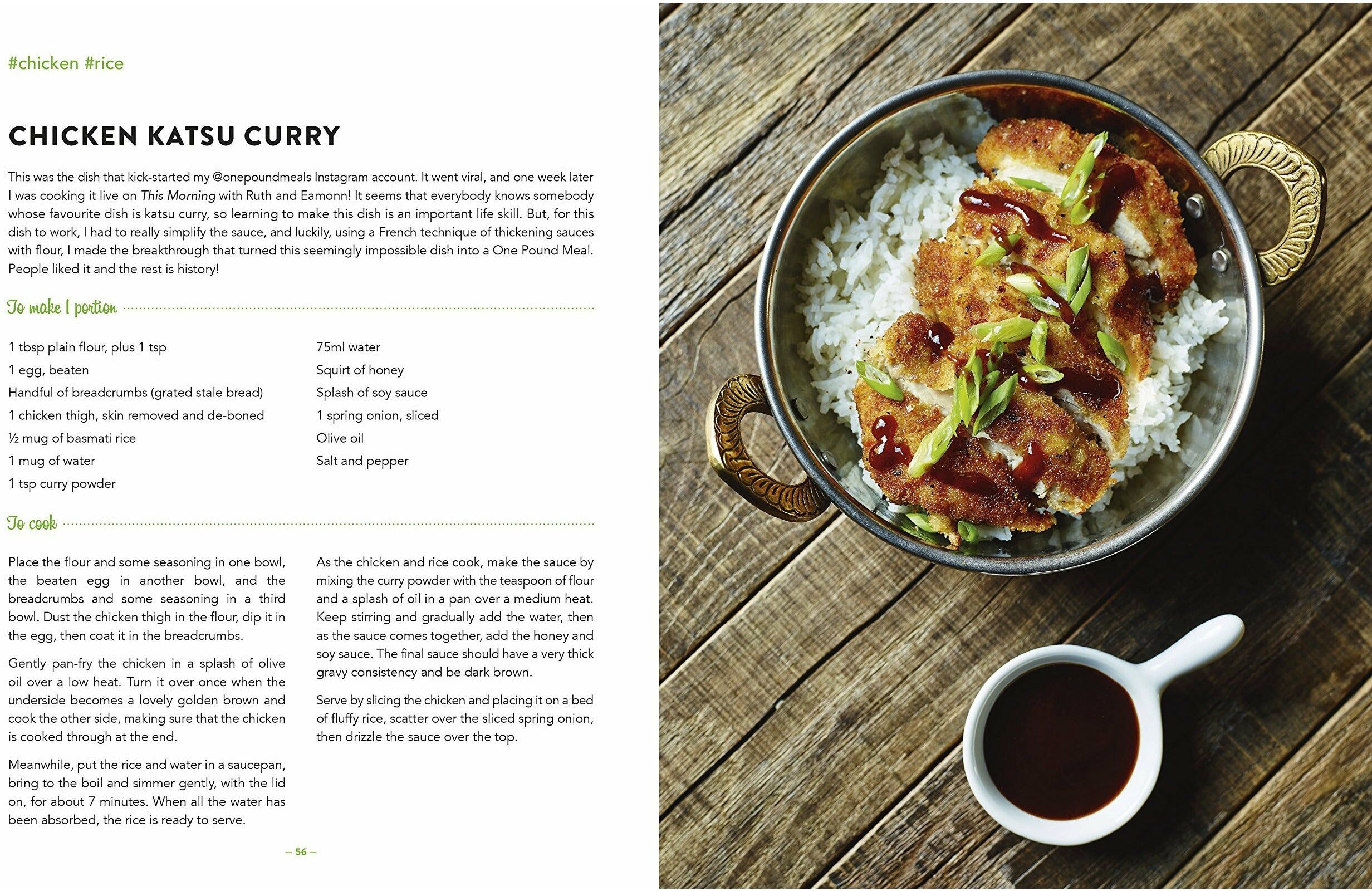
Headline One Pound Meals by Miguel Barclay – Delicious Budget Recipes for Everyday CookingOver 80 super-simple and tasty recipes that will save you both time and money. Here is delicious food for less.So much more than cheap dinner ideas - here are meals that cost under £1 but look and taste a million dollars! Recipes for the whole family without breaking the bank, including lots of favourite and familiar storecupboard ingredients.Instagram chef sensation Miguel Barclay is taking the world by storm with his delicious meals that cost less than £1 per person.'I've always loved cooking but I'm not a fan of needlessly over-complicated recipes that waste time and money.So I've created my own style of cooking: simple ingredients, straightforward recipes and mouthwatering meals, all on a budget.Now you can eat the food you love - from meatball marinara to chicken katsu curry, lamb moussaka to aubergine dal - all for under £1 per person.'Miguel's easy-to-follow, ready-in-minutes recipes are for a single serving, and can all be cooked for under £1 per person - just multiply them up for more servings.'As you would expect from such a relaxed style of cooking, the book is laid out in a similarly laidback manner. There are no chapters or themes. Just flick through the pages and cook whichever dish you fancy. But, as a nod to my Instagram roots and to help you identify types of dish, I have labelled each recipe with hashtags, so if you want to find veggie food, just look out for the veggie hashtags.One Pound Meals are designed to use a core group of ingredients, and this is the key to eliminating waste. Just start with one recipe, and depending on what you have left over, choose your next recipe accordingly. I want you to bounce around the book on a sort of never-ending random journey as you use up those leftover ingredients. It also means you can plan a week's worth of meals in one go and shop more efficiently.'With savvy supermarket shopping swaps and time-saving tips, One Pound Meals makes cooking quicker, easier and tastier, and with less waste.One Pound Meals includes:* Lasagne* Crab mac & cheese* Chicken katsu curry* Pork chop in a mustard & leek sauce* Spaghetti carbonara* Mushroom risotto* Quiche lorraine* Aubergine dal & chapati* Scotch Egg* Ultimate £1 burger* Ham & mushroom pizza* Pancake stack6,99 £*Shipping: 2,99 £Secure redirect to the provider
-
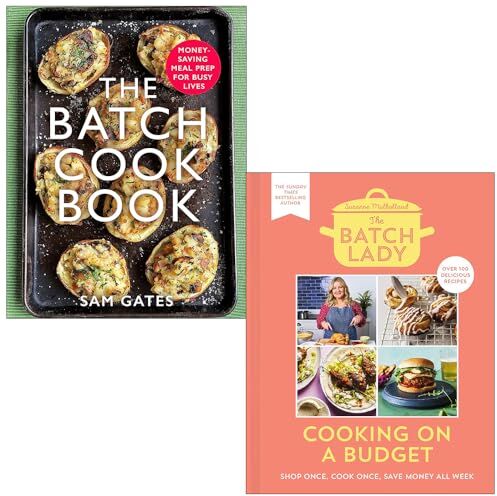
Robinson The Batch Cook Book & The Batch Lady Cooking on a Budget 2 Book Set – Easy Meal Prep & Batch Cooking RecipesThe Batch Cook Book By Sam Gates and [Hardcover] The Batch Lady Cooking on a Budget By Suzanne Mulholland 2 Books Collection Set The Batch Lady Cooking on a Budget [Hardcover]: The Batch Lady is back with a budget-busting book to create fresh and satisfying meals without breaking the purse strings.Shop once.Get organised, plan ahead and create fresh and satisfying meals without breaking the bank.Cook once.Over 100 delicious, simple and energy-efficient batch-cooking recipes that will satisfy the whole family and fill your freezer.Save money all week.Learn to hack your monthly bill, save your hard-earned money and eat well on a budget. The Batch Cook Book: Modern families are busier than ever. We all want to eat better, stress less and reduce waste - all without spending more than we have to. We want new and exciting recipes that are delicious, healthy and make a change from casseroles and spaghetti bolognese. And we want them to be straightforward, reliable and satisfy even the fussiest of eaters.That's where The Batch Cook Book comes in. This gorgeous cookbook will fit right into your busy lifestyle with mouth-watering new recipes and hints and tips for the best batch and meal prep techniques. Each inspiring chapter is packed with fresh ideas, from preparing key ingredients to whipping up perfectly portioned meals for simple suppers or bold, big-hearted feasts for friends and family.11,99 £*Shipping: 2,99 £Secure redirect to the provider
-
What are atomic compounds?
Atomic compounds are chemical compounds that are composed of individual atoms of different elements bonded together. These compounds are held together by chemical bonds, such as ionic or covalent bonds, and do not contain any molecules. Examples of atomic compounds include sodium chloride (NaCl) and water (H2O). Unlike molecular compounds, which are made up of molecules, atomic compounds are made up of individual atoms. **
-
Name the isomeric compounds.
Isomers are compounds that have the same molecular formula but different structural arrangements. Some examples of isomeric compounds include butane and isobutane, which both have the molecular formula C4H10 but differ in their structural arrangement. Another example is glucose and fructose, which both have the molecular formula C6H12O6 but have different structural arrangements and properties. **
-
What are sodium compounds?
Sodium compounds are chemical compounds that contain sodium as one of their elements. These compounds can be found in various forms, such as sodium chloride (table salt), sodium hydroxide (lye), and sodium bicarbonate (baking soda). Sodium compounds are widely used in industry, agriculture, and everyday life due to their diverse properties and applications. **
-
What are molecular compounds?
Molecular compounds are chemical compounds formed by the combination of two or more non-metal atoms. These atoms are held together by covalent bonds, which involve the sharing of electrons. Molecular compounds can exist as discrete molecules, such as water (H2O) and carbon dioxide (CO2), and they typically have lower melting and boiling points compared to ionic compounds. Examples of molecular compounds include methane (CH4), ammonia (NH3), and sulfur dioxide (SO2). **
* All prices are inclusive of VAT and, if applicable, plus shipping costs. The offer information is based on the details provided by the respective shop and is updated through automated processes. Real-time updates do not occur, so deviations can occur in individual cases. ** Note: Parts of this content were created by AI.