Buy dutchoven.eu ?
We are moving the project
dutchoven.eu .
Are you interested in purchasing the domain
dutchoven.eu ?
domain@kv-gmbh.de · 0541-91531010
Buy dutchoven.eu ?
What are demonstrative pronouns and relative pronouns?
Demonstrative pronouns are pronouns that are used to point to specific things or people. Examples of demonstrative pronouns include "this," "that," "these," and "those." Relative pronouns are pronouns that introduce dependent clauses and connect them to independent clauses. Examples of relative pronouns include "who," "whom," "whose," "which," and "that." **
Why are demonstrative pronouns called demonstrative pronouns?
Demonstrative pronouns are called demonstrative because they demonstrate or point to a specific noun or pronoun in a sentence. They help to indicate the position or location of the noun or pronoun in relation to the speaker or listener. By using demonstrative pronouns such as "this," "that," "these," and "those," speakers can make their communication more precise and clear by specifying which person, place, thing, or idea they are referring to. **

Similar search terms for Pronouns
Top-Angebote
Products related to Pronouns:
-
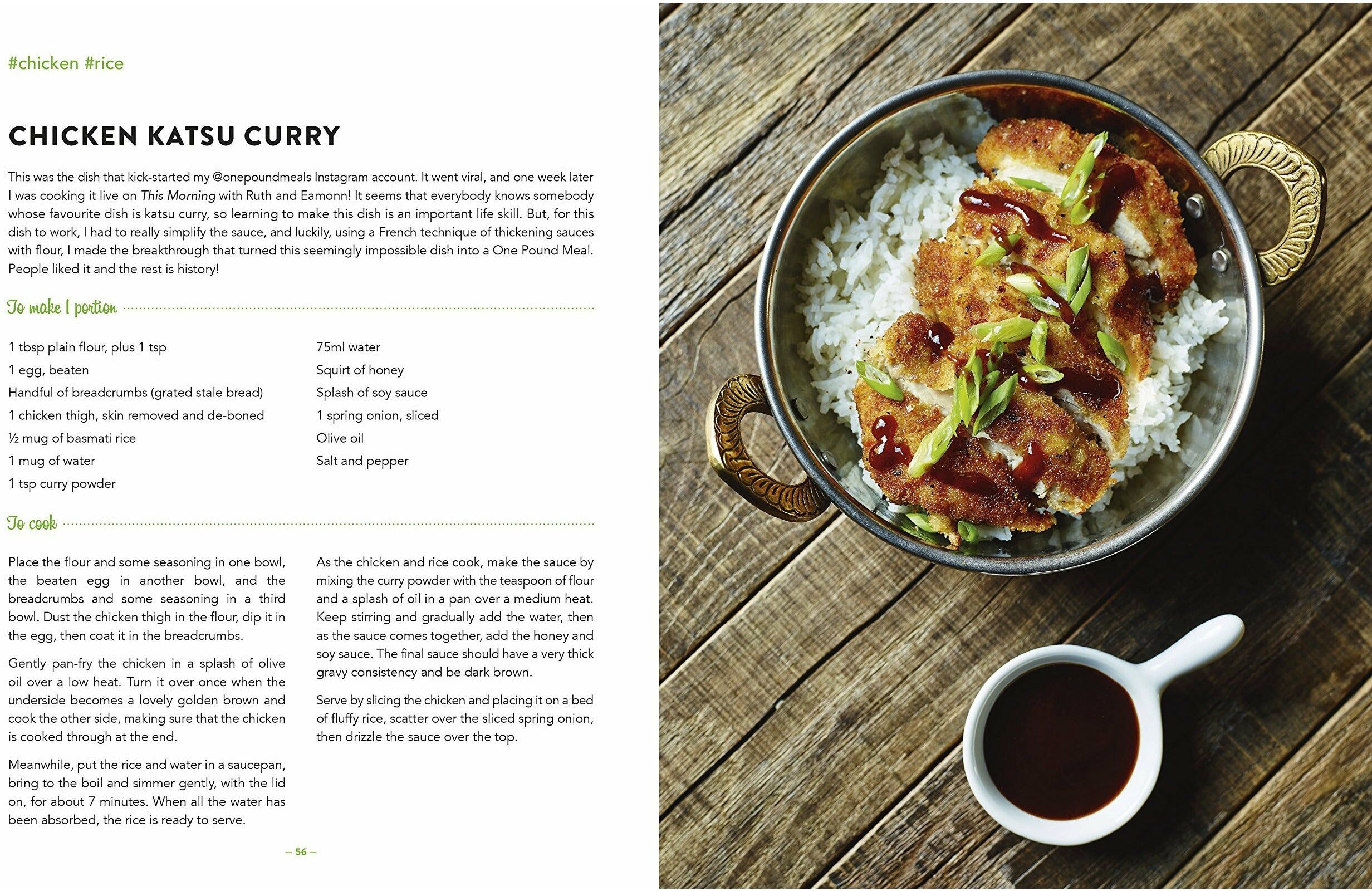
Headline One Pound Meals by Miguel Barclay – Delicious Budget Recipes for Everyday CookingOver 80 super-simple and tasty recipes that will save you both time and money. Here is delicious food for less.So much more than cheap dinner ideas - here are meals that cost under £1 but look and taste a million dollars! Recipes for the whole family without breaking the bank, including lots of favourite and familiar storecupboard ingredients.Instagram chef sensation Miguel Barclay is taking the world by storm with his delicious meals that cost less than £1 per person.'I've always loved cooking but I'm not a fan of needlessly over-complicated recipes that waste time and money.So I've created my own style of cooking: simple ingredients, straightforward recipes and mouthwatering meals, all on a budget.Now you can eat the food you love - from meatball marinara to chicken katsu curry, lamb moussaka to aubergine dal - all for under £1 per person.'Miguel's easy-to-follow, ready-in-minutes recipes are for a single serving, and can all be cooked for under £1 per person - just multiply them up for more servings.'As you would expect from such a relaxed style of cooking, the book is laid out in a similarly laidback manner. There are no chapters or themes. Just flick through the pages and cook whichever dish you fancy. But, as a nod to my Instagram roots and to help you identify types of dish, I have labelled each recipe with hashtags, so if you want to find veggie food, just look out for the veggie hashtags.One Pound Meals are designed to use a core group of ingredients, and this is the key to eliminating waste. Just start with one recipe, and depending on what you have left over, choose your next recipe accordingly. I want you to bounce around the book on a sort of never-ending random journey as you use up those leftover ingredients. It also means you can plan a week's worth of meals in one go and shop more efficiently.'With savvy supermarket shopping swaps and time-saving tips, One Pound Meals makes cooking quicker, easier and tastier, and with less waste.One Pound Meals includes:* Lasagne* Crab mac & cheese* Chicken katsu curry* Pork chop in a mustard & leek sauce* Spaghetti carbonara* Mushroom risotto* Quiche lorraine* Aubergine dal & chapati* Scotch Egg* Ultimate £1 burger* Ham & mushroom pizza* Pancake stack6,99 £*Shipping: 2,99 £Secure redirect to the provider
-
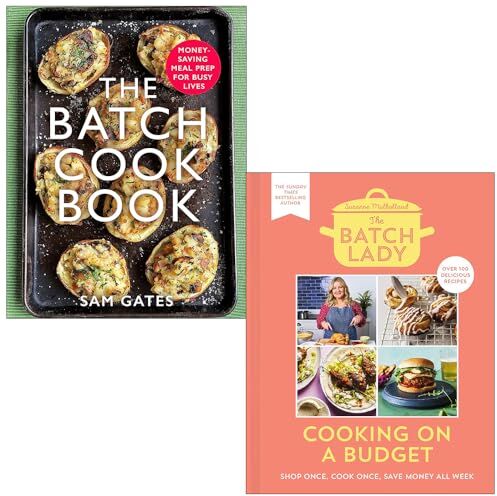
Robinson The Batch Cook Book & The Batch Lady Cooking on a Budget 2 Book Set – Easy Meal Prep & Batch Cooking RecipesThe Batch Cook Book By Sam Gates and [Hardcover] The Batch Lady Cooking on a Budget By Suzanne Mulholland 2 Books Collection Set The Batch Lady Cooking on a Budget [Hardcover]: The Batch Lady is back with a budget-busting book to create fresh and satisfying meals without breaking the purse strings.Shop once.Get organised, plan ahead and create fresh and satisfying meals without breaking the bank.Cook once.Over 100 delicious, simple and energy-efficient batch-cooking recipes that will satisfy the whole family and fill your freezer.Save money all week.Learn to hack your monthly bill, save your hard-earned money and eat well on a budget. The Batch Cook Book: Modern families are busier than ever. We all want to eat better, stress less and reduce waste - all without spending more than we have to. We want new and exciting recipes that are delicious, healthy and make a change from casseroles and spaghetti bolognese. And we want them to be straightforward, reliable and satisfy even the fussiest of eaters.That's where The Batch Cook Book comes in. This gorgeous cookbook will fit right into your busy lifestyle with mouth-watering new recipes and hints and tips for the best batch and meal prep techniques. Each inspiring chapter is packed with fresh ideas, from preparing key ingredients to whipping up perfectly portioned meals for simple suppers or bold, big-hearted feasts for friends and family.11,99 £*Shipping: 2,99 £Secure redirect to the provider
-
With which pronouns do many people confuse reflexive pronouns?
Many people confuse reflexive pronouns with personal pronouns. For example, they may use "myself" or "yourself" instead of "me" or "you" in a sentence. This confusion often occurs when people are trying to emphasize the subject of the sentence, but they mistakenly use a reflexive pronoun instead of a personal pronoun. It's important to understand the difference between reflexive and personal pronouns in order to use them correctly in sentences. **
-
What are pronouns?
Pronouns are words that are used in place of nouns to avoid repetition in a sentence. They can refer to people, places, things, or ideas. Pronouns help make sentences clearer and more concise by replacing specific nouns with general words like "he," "she," "it," "they," and "we." Using pronouns also helps to maintain the flow of writing and make it more engaging for the reader. **
-
What is the difference between relative pronouns and demonstrative pronouns?
Relative pronouns are used to connect a clause or phrase to a noun or pronoun. They include words like "who," "whom," "whose," "which," and "that." Demonstrative pronouns, on the other hand, are used to point out specific things or people. They include words like "this," "that," "these," and "those." While relative pronouns connect a clause to a noun, demonstrative pronouns simply point out or identify something. **
-
Which pronouns do many people often confuse with reflexive pronouns?
Many people often confuse reflexive pronouns with intensive pronouns. Intensive pronouns are used to emphasize a preceding noun or pronoun, while reflexive pronouns are used when the subject and object of a sentence are the same. For example, "I myself will do it" uses an intensive pronoun, while "I hurt myself" uses a reflexive pronoun. It is important to understand the distinction between these two types of pronouns to use them correctly in sentences. **
What is the difference between personal pronouns and reflexive pronouns?
Personal pronouns are used to refer to people or things, such as "I," "you," "he," "she," "it," "we," and "they." Reflexive pronouns, on the other hand, are used when the subject and object of a sentence are the same person or thing, such as "myself," "yourself," "himself," "herself," "itself," "ourselves," and "themselves." Reflexive pronouns are used to reflect the action back onto the subject, while personal pronouns simply refer to the subject or object. **
Can you help me with personal pronouns and possessive pronouns?
Certainly! Personal pronouns are used to replace nouns in a sentence, such as "I", "you", "he", "she", "it", "we", and "they". Possessive pronouns show ownership or possession, such as "mine", "yours", "his", "hers", "ours", and "theirs". If you need help understanding how to use these pronouns in a sentence or identifying which pronoun to use in a specific context, feel free to ask for more guidance. **
Top-Angebote
Products related to Pronouns:
-
HQ BOSH! Simple Recipes. Unbelievable Results. All Plants – Bestselling Vegan Cookbook Easy Plant-Based Recipes for Everyday CookingWant to cook ridiculously good plant-based food from scratch but have no idea where to start? With over 140 incredibly easy and outrageously tasty all plants meals; BOSH! The Cookbook will be your guide. Henry Firth and Ian Theasby; creators of the worlds biggest and fastest-growing plant-based platform; BOSH!; are the new faces of the food revolution. Their online channels have over 2.3 million fans and constantly inspire people to cook ultra-tasty amp; super simple recipes at home. Always ensuring they stick to fresh; supermarket-friendly ingredients; BOSH! truly is 'plant-based food for everyone'. In BOSH! The Cookbook; Ian and Henry share over 140 of their favourite go-to breakfasts; crowd-pleasing party pieces; hearty dinners; sumptuous desserts amp; incredible sharing cocktails. The book is jam-packed with fun; unpretentious and mega satisfying recipes; including Creamy Mac and Greens; Burrito Samosas; the Big Bhaji Burger; the Worlds Best Pesto Lasagne; Satay Sweet Potato BOSH! Bowl; Spanish Beach Churros; Gooey PBJ Brownies and Salted Caramel Chocolate Crunch Tart; all easy enough to be rustled up any night of the week. It's enough to convince the staunchest of carnivores to give plants a whirl. Whether you're already sold on the plant-based lifestyle or you simply want to incorporate more meat; dairy and egg-free meals into your week; BOSH! The Cookbook is your plant-based bible. BOSH!8,40 £*Shipping: 2,99 £Secure redirect to the provider
-
What are demonstrative pronouns and relative pronouns?
Demonstrative pronouns are pronouns that are used to point to specific things or people. Examples of demonstrative pronouns include "this," "that," "these," and "those." Relative pronouns are pronouns that introduce dependent clauses and connect them to independent clauses. Examples of relative pronouns include "who," "whom," "whose," "which," and "that." **
-
Why are demonstrative pronouns called demonstrative pronouns?
Demonstrative pronouns are called demonstrative because they demonstrate or point to a specific noun or pronoun in a sentence. They help to indicate the position or location of the noun or pronoun in relation to the speaker or listener. By using demonstrative pronouns such as "this," "that," "these," and "those," speakers can make their communication more precise and clear by specifying which person, place, thing, or idea they are referring to. **
-
With which pronouns do many people confuse reflexive pronouns?
Many people confuse reflexive pronouns with personal pronouns. For example, they may use "myself" or "yourself" instead of "me" or "you" in a sentence. This confusion often occurs when people are trying to emphasize the subject of the sentence, but they mistakenly use a reflexive pronoun instead of a personal pronoun. It's important to understand the difference between reflexive and personal pronouns in order to use them correctly in sentences. **
-
What are pronouns?
Pronouns are words that are used in place of nouns to avoid repetition in a sentence. They can refer to people, places, things, or ideas. Pronouns help make sentences clearer and more concise by replacing specific nouns with general words like "he," "she," "it," "they," and "we." Using pronouns also helps to maintain the flow of writing and make it more engaging for the reader. **
Similar search terms for Pronouns
-
Headline One Pound Meals by Miguel Barclay – Delicious Budget Recipes for Everyday CookingOver 80 super-simple and tasty recipes that will save you both time and money. Here is delicious food for less.So much more than cheap dinner ideas - here are meals that cost under £1 but look and taste a million dollars! Recipes for the whole family without breaking the bank, including lots of favourite and familiar storecupboard ingredients.Instagram chef sensation Miguel Barclay is taking the world by storm with his delicious meals that cost less than £1 per person.'I've always loved cooking but I'm not a fan of needlessly over-complicated recipes that waste time and money.So I've created my own style of cooking: simple ingredients, straightforward recipes and mouthwatering meals, all on a budget.Now you can eat the food you love - from meatball marinara to chicken katsu curry, lamb moussaka to aubergine dal - all for under £1 per person.'Miguel's easy-to-follow, ready-in-minutes recipes are for a single serving, and can all be cooked for under £1 per person - just multiply them up for more servings.'As you would expect from such a relaxed style of cooking, the book is laid out in a similarly laidback manner. There are no chapters or themes. Just flick through the pages and cook whichever dish you fancy. But, as a nod to my Instagram roots and to help you identify types of dish, I have labelled each recipe with hashtags, so if you want to find veggie food, just look out for the veggie hashtags.One Pound Meals are designed to use a core group of ingredients, and this is the key to eliminating waste. Just start with one recipe, and depending on what you have left over, choose your next recipe accordingly. I want you to bounce around the book on a sort of never-ending random journey as you use up those leftover ingredients. It also means you can plan a week's worth of meals in one go and shop more efficiently.'With savvy supermarket shopping swaps and time-saving tips, One Pound Meals makes cooking quicker, easier and tastier, and with less waste.One Pound Meals includes:* Lasagne* Crab mac & cheese* Chicken katsu curry* Pork chop in a mustard & leek sauce* Spaghetti carbonara* Mushroom risotto* Quiche lorraine* Aubergine dal & chapati* Scotch Egg* Ultimate £1 burger* Ham & mushroom pizza* Pancake stack6,99 £*Shipping: 2,99 £Secure redirect to the provider
-
Robinson The Batch Cook Book & The Batch Lady Cooking on a Budget 2 Book Set – Easy Meal Prep & Batch Cooking RecipesThe Batch Cook Book By Sam Gates and [Hardcover] The Batch Lady Cooking on a Budget By Suzanne Mulholland 2 Books Collection Set The Batch Lady Cooking on a Budget [Hardcover]: The Batch Lady is back with a budget-busting book to create fresh and satisfying meals without breaking the purse strings.Shop once.Get organised, plan ahead and create fresh and satisfying meals without breaking the bank.Cook once.Over 100 delicious, simple and energy-efficient batch-cooking recipes that will satisfy the whole family and fill your freezer.Save money all week.Learn to hack your monthly bill, save your hard-earned money and eat well on a budget. The Batch Cook Book: Modern families are busier than ever. We all want to eat better, stress less and reduce waste - all without spending more than we have to. We want new and exciting recipes that are delicious, healthy and make a change from casseroles and spaghetti bolognese. And we want them to be straightforward, reliable and satisfy even the fussiest of eaters.That's where The Batch Cook Book comes in. This gorgeous cookbook will fit right into your busy lifestyle with mouth-watering new recipes and hints and tips for the best batch and meal prep techniques. Each inspiring chapter is packed with fresh ideas, from preparing key ingredients to whipping up perfectly portioned meals for simple suppers or bold, big-hearted feasts for friends and family.11,99 £*Shipping: 2,99 £Secure redirect to the provider
-
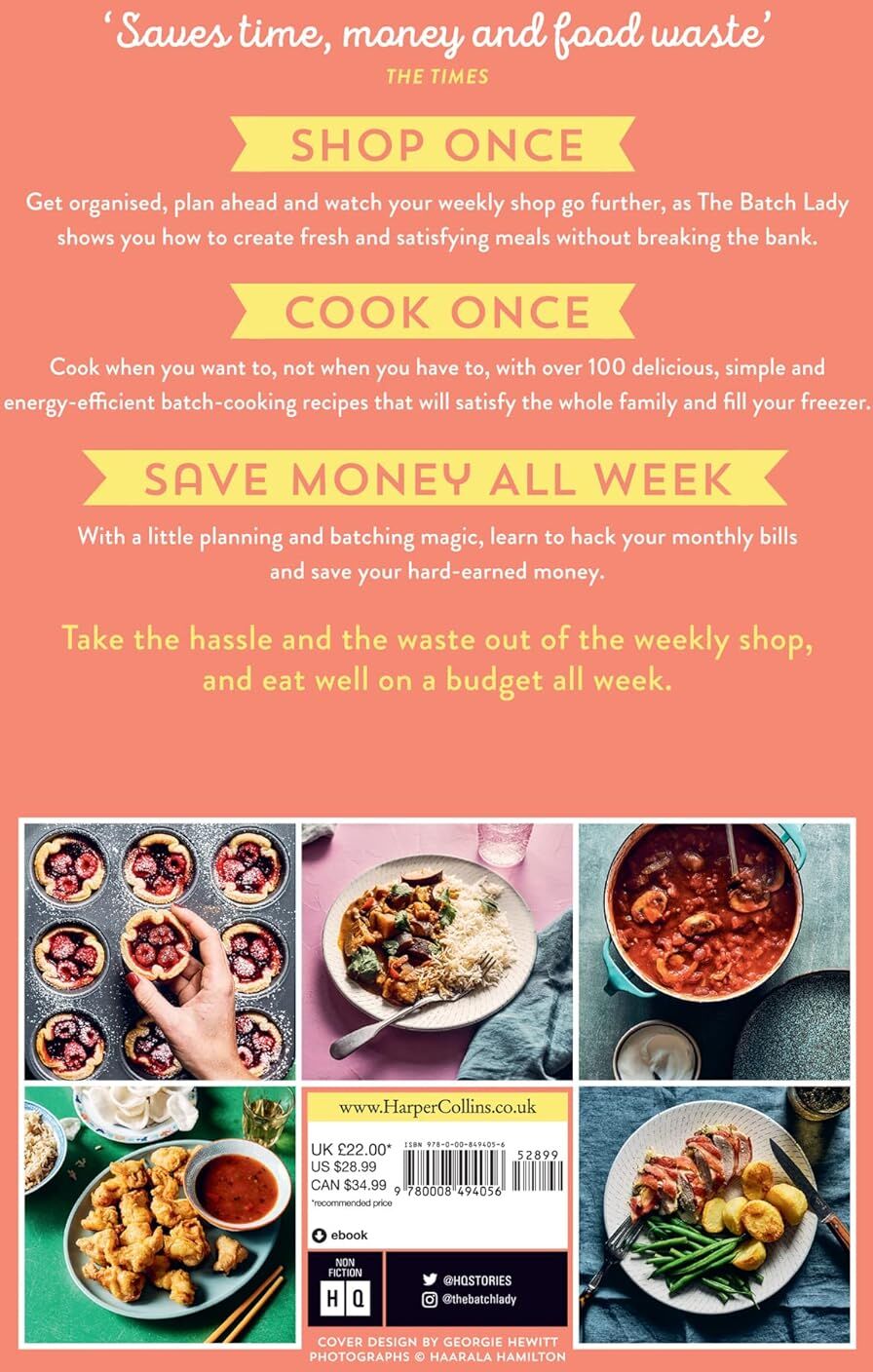
HQ The Batch Lady: Cooking on a Budget by Suzanne Mulholland - Hardback Cookbook - 100+ Budget-Friendly Batch-Cooking Recipes for Busy FamiliesThe Batch Lady: Cooking on a Budget is a practical cookbook from Suzanne Mulholland, the Sunday Times bestselling author known as The Batch Lady. This hardback guide shows busy households how to shop smart, cook in bulk and fill the freezer with delicious meals. It's ideal for parents, students, and anyone looking to save money on food. The book distills Suzanne's method into one accessible collection, covering budget-friendly store-cupboard staples, freezer-friendly casseroles, and more. With over 100 simple, energy-efficient recipes, it turns batch cooking into an easy habit. The book is published by HQ (HarperCollins) and has an ISBN of 9780008494056.8,45 £*Shipping: 2,99 £Secure redirect to the provider
-
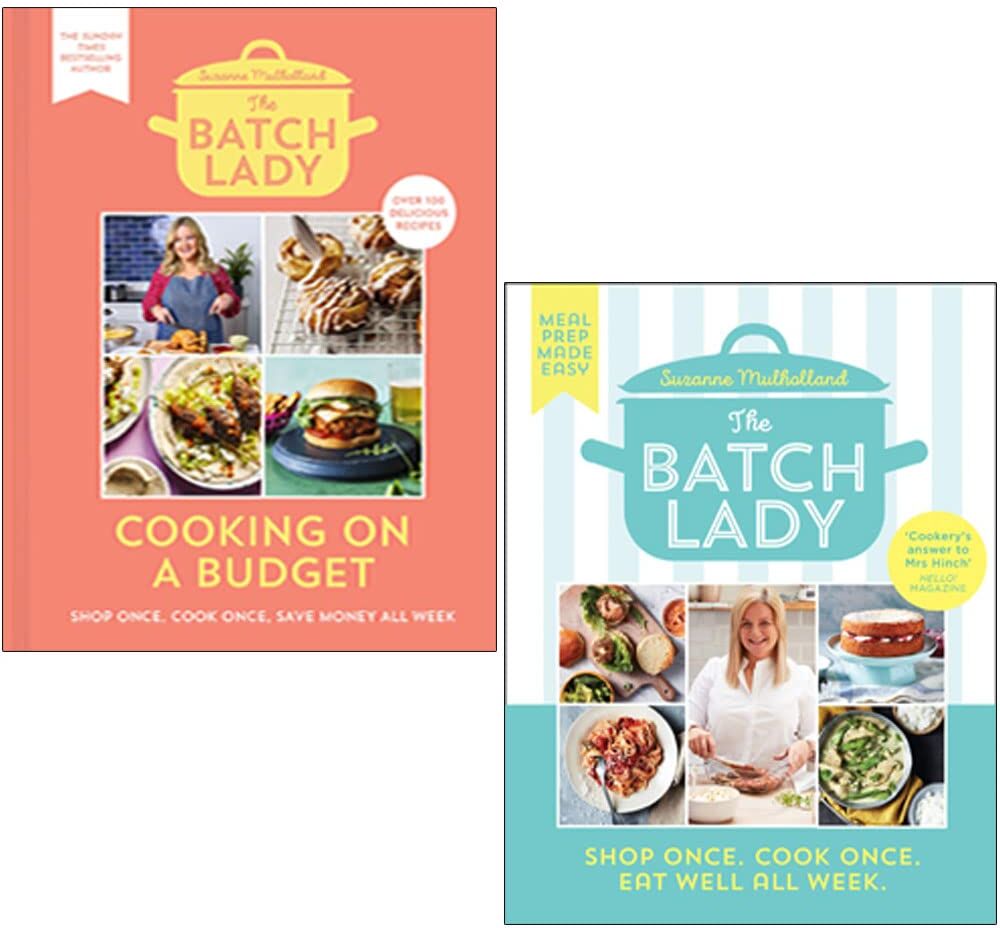
HARPERCOLLINS/HQ The Batch Lady & Cooking on a Budget 2 Book Set by Suzanne Mulholland – Easy Batch Cooking & Budget Meal Prep RecipesThe Batch Lady Collection 2 Books Set By Suzanne Mulholland (The Batch Lady Cooking on a Budget, The Batch Lady) The Batch Lady Cooking on a Budget: Shop once. Get organised, plan ahead and create fresh and satisfying meals without breaking the bank. Cook once.Over 100 delicious, simple and energy-efficient batch-cooking recipes that will satisfy the whole family and fill your freezer.Save money all week.Learn to hack your monthly bill, save your hard-earned money and eat well on a budget. The Batch Lady: The Batch Lady has been transforming how thousands of people cook and eat through her revolutionary online channel. Now she’s going to share her secrets with you.With over 80 delicious, home-cooked recipes that are quick to make, create and store, Suzanne's brilliant recipe combinations and time-saving tips will transform your kitchen, and will buy you back extra hours in your week.This is the only guide you will ever need to save you money, time, and headspace, and change your life for good.12,99 £*Shipping: 2,99 £Secure redirect to the provider
-
What is the difference between relative pronouns and demonstrative pronouns?
Relative pronouns are used to connect a clause or phrase to a noun or pronoun. They include words like "who," "whom," "whose," "which," and "that." Demonstrative pronouns, on the other hand, are used to point out specific things or people. They include words like "this," "that," "these," and "those." While relative pronouns connect a clause to a noun, demonstrative pronouns simply point out or identify something. **
-
Which pronouns do many people often confuse with reflexive pronouns?
Many people often confuse reflexive pronouns with intensive pronouns. Intensive pronouns are used to emphasize a preceding noun or pronoun, while reflexive pronouns are used when the subject and object of a sentence are the same. For example, "I myself will do it" uses an intensive pronoun, while "I hurt myself" uses a reflexive pronoun. It is important to understand the distinction between these two types of pronouns to use them correctly in sentences. **
-
What is the difference between personal pronouns and reflexive pronouns?
Personal pronouns are used to refer to people or things, such as "I," "you," "he," "she," "it," "we," and "they." Reflexive pronouns, on the other hand, are used when the subject and object of a sentence are the same person or thing, such as "myself," "yourself," "himself," "herself," "itself," "ourselves," and "themselves." Reflexive pronouns are used to reflect the action back onto the subject, while personal pronouns simply refer to the subject or object. **
-
Can you help me with personal pronouns and possessive pronouns?
Certainly! Personal pronouns are used to replace nouns in a sentence, such as "I", "you", "he", "she", "it", "we", and "they". Possessive pronouns show ownership or possession, such as "mine", "yours", "his", "hers", "ours", and "theirs". If you need help understanding how to use these pronouns in a sentence or identifying which pronoun to use in a specific context, feel free to ask for more guidance. **
* All prices are inclusive of VAT and, if applicable, plus shipping costs. The offer information is based on the details provided by the respective shop and is updated through automated processes. Real-time updates do not occur, so deviations can occur in individual cases. ** Note: Parts of this content were created by AI.